Translate

Showing posts with label Thing to Do. Show all posts

Friday, September 11, 2015

MBK Shopping Center Bangkok #pakettourthailand

Bangkok Shopping Malls


MBK is probably Bangkok's most legendary shopping mall, popular with both tourists and locals, and busy with shoppers every day. There are eight floors packed with 2,000 shops that sell everything from clothing, fashion accessories, handbags, leather products and luggage to furniture, mobile phones, electric appliances, cameras, stationery and DVDs. Launched in 1986, MBK is a beehive of activity, especially on weekends, when half of Bangkok converges to shop for bargains. It's not as up-market or stylish as neighbouring Siam Discovery, Siam Centre and the glitzy Siam Paragon, but it offers a mind-boggling range of goods spread over 89,000 square metres and is considerably less expensive.

MBK is particularly easy to reach thanks to a direct walkway linking to National Stadium BTS Skytrain Station. Literally every taxi driver knows this most famous of shopping malls in Bangkok too, so you can hail a cab from anywhere but traffic can be intense.


http://www.skyetourandtravel.com/bangkok-pattaya-itinerary/

On the ground floor of MBK you will find lines of stalls selling fashion, shoes and handbags, fast food outlets and a Tops Supermarket, with an open space dedicated to sales offering prices discounted by 30% to 50%. As you move up the levels you will find enclaves of products almost-randomly placed. Part of the fun of MBK is exploring the long straight paths looking out for things that take your fancy. As a rough guide, fashion can be found on the lower floors, a mass of electronics on the third and fourth floors, with home furnishings and souvenirs on the fifth and sixth. 

Like every shopping complex in Bangkok, there are plenty of options when you get hungry. There are two food courts - one local (sixth floor), one international (fifth floor) - with lots of choice. The top floor comprises of an entertainment complex boasting a multi-screen cinema, karaoke, a computer games arcade and plenty of other restaurants. MBK have also added a 3D Trick Art Museum, which is a fun family activity just perfect for a rainy day.


Bargains galore – and free air-conditioning!

To start with, fashion outlets cover everything from jeans, outsized clothing (for the 'larger' Western frame), shoes, handbags, accessories, jewellery, trendy apparel and famous-name brands. The bargain prices of many of these items mean that merchandise is often copy products or from questionable origin. It's important to take a closer look at the quality and craftsmanship.

But if your idea of a shopping bargain is to pay a few dollars for an Adidas T-shirt or a Gucci belt – and authenticity is not an issue – head straight to MBK. Many of the products that can be found here are similar to that at markets, but the convenience of shopping in an air-conditioned environment beats hot and sticky markets – especially in the hot season.

And, just like the markets, all prices are negotiable; MBK is probably the only mall in Bangkok where you can put your bartering skills to the test. You'll be surprised how much a big smile can knock off the original asking price. If you're shopping wholesale, prices get even more competitive.


Heaven for Electronic Goods and Mobile Phones

The fourth floor is dedicated to mobile phones, DVDs, CDs and all kinds of related gadgets and paraphernalia in a market-type environment with stalls crammed into every available space. New phones, second-hand phones, starter packs, the latest (copy) DVDs, PC games and games consoles, MP3 players and what have you...

A flagship tenant is the four-storey Tokyu Department Store, the only one in Bangkok and a leading department store in Japan, which offers a wide range of quality merchandise like clothing, apparel, cosmetics and household goods at reasonable prices. On the fourth level is has a supermarket too. There's also a TOPS supermarket at MBK (ground level) and a mini indoor craft market (on the sixth floor) with a range of arts and crafts from all over Thailand – a lot of it though the typical souvenir-type items targeted at tourists.


PT. I Five Productionz
Jalan Taman golf no.28 , LK Centre , Tangerang, Banten, Indonesia, 11520.
Phone:+62812 6 555 555 9 (WA)
BlackBerry Messenger: 5717ba69
Instagram : SKYE_AYARI
Facebook : Skye Club
Officials Line@ : @pwv8354w
E-mail :  admin@skyetourandtravel.com / skye.operator@gmail.com

Madame Tussauds Bangkok #pakettourthailand

Bangkok Wax Museum


If you are a skeptic, you’d probably think a wax museum is a wax museum is a wax museum, right? What’s the hype all about? Well, for starter, Madame Tussauds has stepped down from the pedestal and embraced her visitors with a revolutionary concept – the wax museum with exhibits you can touch, hug, play with and even kiss. Imagine shooting hoops with the Houston Rockets centre Yao Ming, appearing on The Oprah Show, practicing Kung Fu with Bruce Lee, drinking espresso with George Clooney, or… ahem… putting your arm over your old pal Mao Zedong’s shoulders.

Located in the Siam Discovery Center, in Siam area, Madame Tussauds Bangkok is no old-fashioned wax museum. For the entertainment value and a chance to rub shoulders with world celebrities, heads of state, activists, sports heroes and heroines, legendary artists, and even royalty, the museum is worth checking out. 


Madame Tussauds Highlights

With 10 exhibit rooms decked out in real-life themes, the museum feels more like a journey from one time-warp to the next – Lady Di next to Mao Zedong, Pablo Picasso and his Cubist painting next to Thailand’s leading and somewhat eccentric forensic pathologist Dr. Porntip Rojanasunan in her full rock star regalia, Barak and Michelle Obama in their Oval Office next to Aung San Suu Kyi and the Dalai Lama.

Out of the 10 rooms, The Royal Room is the most elegant and culturally significant, as it showcases the wax figures of HRH Prince Mahitala Thibed Adulyadej and HRH Princess Srinagarindra, the late parents of His Majesty the King. All the decorative elements in this room are meticulously planned down to the tiniest details, whether the royal costumes, colour scheme, floral graphic patterns and music, all of which received the Royal endorsement from the Thai Royal family. This is the only room in which you are not allowed to touch the figures.

A controversial political personality, Chairman Mao seems to get more attention from visitors than Princess Diana or Queen Elizabeth II. But the most photographed is probably a section of the Oval Office, with the U.S. President and First Lady posing by the festoon curtains.


Watch World Geniuses at Work

Enough with all formalities, let’s get to the fun part. While Picasso is taking a cigarette break, steal his canvas and create your own masterpiece. Need a piano lesson? Learn it from the Maestro, Ludwig van Beethoven. Meet Albert Einstein in person, or hug him if you are a fan – his moustache looks so real that it invites your touch. Did he really have his hair like that all his adult life?

Following Einstein’s glance, you see what looks like Thailand’s Democracy Monument and a foreign sculptor working on his soon-to-be masterpiece. This is the man behind so many important monuments you see in Bangkok. So, meet Silpha Bhirasri (born Corrado Feroci), an Italian sculptor who helped shape Thailand’s modern art scene.

Sports fans, be prepared for some action with your heroes and heroines, whether it’s a game of tennis with former world’s number one Serena Williams – whose biceps are, by the way, bigger than my thighs – kicking bendy goals while David Beckham is watching, putting with Tiger Woods, or lifting weights with Thailand’s Olympic gold medalist Pawina Thongsuk. Yao Ming, by the way, is as tall as the basketball hoop –try and steal the ball away from him! 


Join the A-List Party

After saying goodbye to Yao, it’s time to hit the limelight with your favourite pop idol. Take charge of the microphone, while Madonna and Britney can only look on, or challenge the King of Pop with your best moonwalk. After you’ve had enough fun, proceed down the red carpet and join the glamourous party with the most beautiful faces of Hollywood, whether Johnny Depp, Tom Cruise, Nicole Kidman, Leonardo DiCaprio, Julia Roberts, Brad Pitt, Angelina Jolie, and so on.


Quality Craftsmanship

Behind the glory and glamour, what makes Madame Tussauds Bangkok different from other wax museums in Thailand is the quality of craftsmanship and attention to detail, from set designs all the way to daily maintenance. It takes British craftsmen between three and six months to finish one wax figure, and the process is highly elaborate. Implanting hair is perhaps the most labourious task, as is the case of some female stars. Each strand of hair is implanted one by one, using real human hair. And the effect, when combined with the sparkle in the figure’s eyes – try looking into Julia Roberts’ or Princess Diana’s – is totally stunning.

You can learn all about the craft of wax work from the second-floor exhibit on the history of Madame Tussauds. The museums’ souvenir boutique carries an interesting collection of memorabilia and quirky accessories you might want to bring home with you.


PT. I Five Productionz
Jalan Taman golf no.28 , LK Centre , Tangerang, Banten, Indonesia, 11520.
Phone:+62812 6 555 555 9 (WA)
BlackBerry Messenger: 5717ba69
Instagram : SKYE_AYARI
Facebook : Skye Club
Officials Line@ : @pwv8354w
E-mail :  admin@skyetourandtravel.com / skye.operator@gmail.com

Nong Nooch Tropical Garden & Cultural Village #pakettourthailand

Nong Nooch Garden is set in a 2.4sq.km. beautifully landscaped park and can easily make an all-day trip. The entire area is more like a theme park, with daily cultural shows, restaurants and accommodation as well as a vast area showcasing individually themed gardens. A leisurely stroll through the botanical park is like taking a journey around the world, through its many famous gardens, whether 17th-century French garden, Stonehenge, or European Renaissance garden. Equally fascinating are species-specific gardens, such as cactus and succulent plants, orchid nurseries, tropical palm gardens, bonsai and topiary garden.


Due to its vast landscape, it’s unlikely that you will hit all the attractions within Nong Nooch Garden by walking alone. It’s a good idea to rent a bicycle and explore the garden at a leisurely pace. Don’t miss the orchid nurseries which house more than 670 native species and hybrids all in one place – the largest collection in the country. Showcasing exotic-shaped leaves and blossoms, the cactus and succulent plants garden is both educational and eye-opening.

Meanwhile, the French garden, with its symmetrical design and perfectly manicured shrubs modeled after the gardens of Versailles, is another big highlight. An interesting feature is the skywalk, a shaded, 1.1km elevated walkway that takes you through the topiary garden, European garden, tropical palm garden, butterfly hill and Stonehenge garden. Apart from the botanical park, Nong Nooch Garden features daily shows at the Thai Cultural Hall. Enjoy the spectacle of sights and sounds in a classical Thai dance, Muay Thai or ancient drum performance, as well as the elephant talent shows. Other activities include paddle boats, elephant rides and cycling.


PT. I Five Productionz
Jalan Taman golf no.28 , LK Centre , Tangerang, Banten, Indonesia, 11520.
Phone:+62812 6 555 555 9 (WA)
BlackBerry Messenger: 5717ba69
Instagram : SKYE_AYARI
Facebook : Skye Club
Officials Line@ : @pwv8354w
E-mail :  admin@skyetourandtravel.com / skye.operator@gmail.com

Temple Of Reclining Buddha #pakettourthailand

Wat Pho (the Temple of the Reclining Buddha), or Wat Phra Chetuphon, is located behind the Temple of the Emerald Buddha and a must-do for any first-time visitor in Bangkok. It's one of the largest temple complexes in the city and famed for its giant reclining Buddha that measures 46 metres long and is covered in gold leaf. It’s an easy ten minute walk between here and the Grand Palace, and we recommend coming to Wat Pho second, because even though the golden Buddha here is just as popular many people don’t take the time to wander around the rest of the complex so the experience tends to be far more relaxing. This is also a great place to get a traditional Thai massage. Wat Pho is often considered the leading school of massage in Thailand, so you really are in good hands here. Since December 2012, entrance to the temple costs 100 baht and you can visit any time between 08:00 and 17:00.


The highlight for most people visiting Wat Pho is the Reclining Buddha. The figures here are impressive: 15 metres tall, 46 metres long, so large it feels like it has been squeezed into the building. The Buddha's feet are 5 metres long and exquisitely decorated in mother-of-pearl illustrations of auspicious 'laksanas' (characteristics) of the Buddha. 108 is a significant number, referring to the 108 positive actions and symbols that helped lead Buddha to perfection. You’ll need to take your shoes off to enter, and if you would like a little good luck, we recommend purchasing a bowl of coins at the entrance of the hall which you can drop in the 108 bronze bowls which line the length of the walls. Dropping the small pennies in makes a nice ringing sound and even if your wishes don’t come true, the money goes towards helping the monks renovate and preserve Wat Pho. As this is a revered image, all visitors must wear appropriate clothing; this means no exposed shoulders or skin above the knee.

As we said before, it really is worth taking a look round the rest of the temple. Wat Pho also has good English speaking guides who will provide interesting information for around 200 - 400 baht, depending on how many people there are in your group and how good your negotiating skills are. If you prefer, you can wander alone. Recommend sites include four chapels that contain 394 gilded Buddha images, long lines of golden statues from different parts of Thailand sitting in the lotus position. Although the intricately detailed murals that cover the walkways around Wat Pho will require a book or guide to decipher, the exquisite murals are so detailed and intricate that even if you don’t understand all the imagery you can still appreciate the artwork. Finally in the courtyards at Wat Pho Temple are some comical looking Chinese statutes that were once uses as ballasts on ships and 91 chedis (or stupas) decorated in ceramic pottery flowers and colourful tiles.


Wat Pho was the first public university in Thailand, specialising in religion, science and literature. It is now more well-known as a centre for traditional massage and medicine. After a walk around the temple there is nothing quite like a relaxing foot or head and shoulder massage. If you've never tried a traditional Thai massage, Wat Pho is a good place to experience this popular leisure activity. It's quite different to most other forms of therapeutic massage and tends to be invigorating rather than relaxing, incorporating yoga style postures to relieve stress and improve blood circulation. This is a very popular activity at Wat Pho temple, so we recommend you pop in before your treatment to book a spot, or you might end up with a long wait.

PT. I Five Productionz
Jalan Taman golf no.28 , LK Centre , Tangerang, Banten, Indonesia, 11520.
Phone:+62812 6 555 555 9 (WA)
BlackBerry Messenger: 5717ba69
Instagram : SKYE_AYARI
Facebook : Skye Club
Officials Line@ : @pwv8354w
E-mail :  admin@skyetourandtravel.com / skye.operator@gmail.com

Chao Phraya River in Bangkok #pakettourthailand


Like all urban rivers, the history of the Chao Phraya is intertwined with the city it flows through. The original site was chosen by early settlers because of its fertility and abundant fish. Later King Taksin, after the fall of Ayutthaya to the Burmese, located his new capital here, on the western banks today known as Thonburi.

In 1782 King Rama I, finding the eastern banks more favourable, founded modern Bangkok and celebrated the occasion by building some of the world's most beguiling temples. Later still the canals it feeds became famous, earning Bangkok its 'Venice of the East' epithet. And, meanwhile, eminent Western authors like Maugham, Conrad and Coward were singling out the Chao Phraya as one of their favourite spots in the Far East.


‘The River of Kings’

Truly, the River of Kings - as King Rama I named it - is the lifeblood of Bangkok. And not just because of this rich history. Around 50,000 people still use its ferries to get to each day. Slow barges bearing cargo coast upstream. Kids still frolic in the russet-brown water. Wooden shacks, mottled by the elements, still lurch over the water.

Soaring hotels and condominiums hem in solemn temples, churches and civic buildings that look 19th century European, while yards away the odd wooden sampan sells noodle soup or dried squid to hungry river workers. It is this juxtaposition of calm and chaotic, modern and traditional, religious and secular, ugly and sublime, foreign and indigenous that makes the Chao Phraya so evocative.


River Boats and Ferries

Five public boat lines, all operated by the Chao Phraya Express Boat company, ply the same 21km route: 'local line', 'orange', 'yellow', 'blue' and 'green-yellow'. Operating between 06:00 and 19:30 daily, each is identifiable by the coloured flag hanging off its rear.

The rush-hour only 'local line' stops at all 34 piers, while the other four are express lines stopping at only selected piers. Only the Orange Flag Line, with its flat fee of 15 baht, runs all day and on weekends – for most journeys this fits the bill. The others stop at around 09:00 and begin again at around 16:00. Cross-river ferries operate at most major piers and will drop you to the other bank for 3.5 baht (see Chao Phraya Pier Guide for details).

'Tourist Boats' are another option, offering unlimited trips to nine prominent piers for a 150 baht flat fee (service hours: 09.30 - 15.00 daily). Not a bad deal if you plan to do a lot of hopping on and off over one day, want more comfort and the sites to be pointed out to you. Bear in mind though – these run every 30 minutes while the public lines used by locals typically run every 15 to 20 minutes. Other options for exploring the river include hiring a long-tail boat (usually includes trips down the city's canals), a river cruise or dinner cruise. All give a different perspective on this fascinating river.


Chao Phraya River

Phra Arthit Road runs parallel to the Chao Phraya River, stretching from Phra Sumen fort to Thammasat Universty. Lined with quaint shop-houses, cosy hole-in-the-wall restaurants, bars and cafés with live music, this is where the artsy type convene after sundown before hitting nearby Khao San Road. The nearest river pier is Phra Arthit Pier.

Thewet is scintillating. People come here to make merit by releasing fish or to feed the school of frenzied catfish scraps of bread. There's also a ramshackle yet photogenic wet market, and the Royal enclave of Dusit nearby. The nearest river pier is Thewet.

Oriental, the old Westerner Quarter with crumbling European architecture, antiques shops and the venerable Mandarin Oriental Hotel, where some of the 20th century's most eminent scribes once stayed. The nearest river pier is Oriental.

Pak Khlong Flower Market, a living breathing oriental market teeming with life and colour, is one of the most pleasant places to spend an early morning. Find fresh flowers of all species, fruits and vegetables at wholesale price. The nearest river pier is Rajinee.


PT. I Five Productionz
Jalan Taman golf no.28 , LK Centre , Tangerang, Banten, Indonesia, 11520.
Phone:+62812 6 555 555 9 (WA)
BlackBerry Messenger: 5717ba69
Instagram : SKYE_AYARI
Facebook : Skye Club
Officials Line@ : @pwv8354w
E-mail :  admin@skyetourandtravel.com / skye.operator@gmail.com

Saturday, August 29, 2015

Jim Thompson House in Bangkok #pakettourthailand


The lovely garden-enclosed compound sitting on the bank of the Saen Saeb Canal would have gone completely unnoticed, had it not been for a legacy left behind by a middle-aged American man named Jim Thompson. His elegant residential enclave, comprising six traditional Thai teakwood houses transported from Ayutthaya and Bangkok’s Ban Krua community, echoes Jim Thompson’s 30-year love affair with Southeast Asian art and cultural heritage. 


An architect by training and an avid collector of Asian objets d’art, Jim Thompson’s keen eyes and flair for design breathed life into everything he touched. After his discharge from military service in 1946, Jim Thompson decided to settle down in Thailand, where he dedicated over 30 years to reviving Thai silk – then a dying cottage industry – and introduced it to the world’s most respectable fashion houses and catwalks in Paris, New York, London and Milan. 

The same goes for his Thai house, which was no ordinary teakwood villa complex filled with incongruous collections of antiques, but a breathing museum – even then – that embodies Jim Thompson’s life-long passion and whimsical design choices. One day in 1967, while at the height of his success, he mysteriously disappeared into the Malaysian jungle, and thus began the legacy of Jim Thompson…


Where East Meets West

In the shadow of surrounding trees, the house’s inconspicuous façade belies a tastefully decked entry foyer, itself an unconventional architectural feature in traditional Thai houses and a preamble to Jim Thompson’s signature East-meets-West style permeating throughout the house.


A clever lighting arrangement draws your eyes to two wall niches displaying a 17th Century standing Buddha and a wooden hand-carved figurine. High above your head, a Belgian chandelier glistens from the ceiling, while the floor is laid out with Italian marble tiles, punctuating the heavy wood accents on the walls and indoors staircase.


A Tasteful Collection of Art and Antiques

Upstairs, you are greeted by a series of decorative wall hangings that Jim Thompson acquired from various Buddhist temples. Like ancient murals, they tell stories of the Buddha’s previous and present lives as well as his spiritual journey towards attaining enlightenment. From here, proceed to the right and encounter the solemn sandstone Buddha image guarding the entry to the Thai kitchen, which now houses Jim Thompson’s exquisite collection of Benjarong porcelain ware.


The dining room is housed inside the 19th Century teakwood villa Thompson bought from its owner in Ayutthaya. On the dining table, fashioned from two Chinese mahjong tables, the blue-and-white porcelain set is laid out in its full glory, as if dinner is about to be served, with Thompson seated at the head of the table, his back to the windows. 


Jim Thompson House - Living at the Water’s Edge

Set between the private quarter and the dining area is the living room, constructed from the 100-year-old wooden house Jim Thompson bought from the Ban Krua Muslim community just across the canal. The villagers at Ban Krua were the first weavers of the Jim Thompson silk brand. Jim Thompson used to row across the canal and back every day, until he decided to build a permanent home here.


With a four-metre-high ceiling and one open-sided wall, the living room is a lofty area overlooking the Saen Saeb Canal. Thompson masterfully converted the four windows into four display niches, upon which he placed four Burmese guardian spirits (or ‘Nats’) carved from wood, a gift from the Burmese government.


Master of His Own Trade

As you wander from one room to the next, you can’t help but admire Jim Thompson’s thoughtful eclecticism and meticulous attention to details. His sophisticated taste and in-depth knowledge of Southeast Asian art shine through the rare antique and art collections placed tastefully in each room that enrich the overall ambience, rather than just show off his wealth.


While respecting local traditions and customs, he was no slave to them either. The staircase and bathrooms are found indoors, rather than outdoors as you would normally find in traditional Thai homes. Satellite houses, which normally would be linked through an open courtyard area, are all grouped under one roof with a covered walkway. And the decorative window panels, which traditionally face outwards, face in. Jim Thompson’s skillful adaptation of the local style to suit his western upbringing was years ahead of its time, rendering a timeless twist to what would otherwise be labeled as ‘classic’ or simply ‘colonial’. 


The Jim Thompson Brand

After Jim Thompson’s mysterious disappearance, a court-appointed administrator, which 10 years later became The James H.W. Thompson Foundation, took over the management of his house and assets. Today, the brand Jim Thompson also extends to an art centre, souvenir boutique, restaurant and café, as well as banqueting facilities located in the same vicinity. With an outdoor terrace by the canal, the elegantly appointed Araya Hall caters for gatherings of between 40 and 80 people, whether a corporate function, meeting, fashion show, wedding banquet, press conference, private luncheons or dinners.


Jim Thompson House

Opening Hours: 09:00-17:00 (last guided tour at 17:00)
Location: Soi Kasemsan 2, opposite the National Stadium on Rama I Road.
BTS: National Stadium
Address: 6/1 Soi Kasemsan 2, Rama 1 Road
Tel: +66 (0)2 216 7368
How to get there: Take exit 1 from the BTS National Stadium Station, turn right into Soi Kasemsan 2 and continue walking all the way to the very end. The museum will be on your left-hand side.

Friday, August 21, 2015

10 Things to do with Kids in Bangkok #pakettourthailand

10 Things to do with Kids in Bangkok

Bangkok has something for every breed of child, be they bookworm, games arcade aficionado or the full-of-energy kind. Here is just as much fun and adventure to be had for little people, and the possibilities are endless. From exploring delicate butterflies and a fascinating underwater life, to an exciting boat trip on the Chao Phraya River and lots of shrieks at a water park. And if you can take a moment between working your way down this top-ten list to vote for your favourite, we’ll be very thankful. 


Siam Ocean World

Get nose to nose with the fascinating underwater creatures only separated from you by glass, or dare even to dive among sharks! Among the startling array of luminous fishes, behold Oriental Small Clawed Otters, fascinating Weedy Seadragons and freaky Moon Jellies. Fun and informative interactive features keep anyone interested for hours.


Fly a Boeing 737 (simulator of course!)

A simulation flight is an extra-special gift for everyone, from young children who dream of being pilots to those who have a passion for planes, and according to research it can even help those who are scared of flying find their wings. The experience feels so realistic that the cockpit in Bangkok has even been used in films and TV shows, and although it isn’t a bargain, it still costs significantly less than in Australia or Europe.


Surf at Flow Rider

Flow Rider is an artificial wave machine and beach club in the heart of Bangkok that provides a great way for the whole family to have fun, keep fit and cool off – all while learning a new sport. Flowriding is basically an amalgamation of surfing and wakeboarding on an inflatable ramp which has a thin sheet of water pumped up and over it to simulate a perpetual breaking wave.


Kidzania

Kidzania is the very latest and, without a doubt, most innovative addition to the 'edutainment' scene in Bangkok. This is unlike anything we have seen before and the level of fun has been raised to a brand new level. Kidzania, originally a Mexican company, has been opening family entertainment centers since 1999 in Santa Fe, then in 11 additional locations around the world; Bangkok being the latest one.


Art in Paradise Trick-Eye 3D Museum

Art in Paradise, the very successful interactive attraction which started in Pattaya, is now open at Esplanade Shopping Mall on Ratchada road. Also refered by locals as the Trickeye Museum or 3D Museum, Art in Paradise is great fun for couples, friends and families to spend a few hilarious hours, especially on rainy days. Esplanade Mall is located on the outskirts of Bangkok, but the MRT station is right in front of the mall.


Madame Tussauds Wax Museum

Madame Tussauds has stepped down from the pedestal and embraced her visitors with a revolutionary concept – the wax museum with exhibits you can touch, hug, play with and even kiss. Imagine shooting hoops with the Houston Rockets centre Yao Ming, practicing Kung Fu with Bruce Lee, or scoring a goal while the effigy of David Beckham watches you. 


Ice Skating

Here's another cool (literally!) excuse to escape from the heat. Bangkok has several great ice rinks - one even that is Olympic-sized. If you're a bit wobbly on skates, take a lesson. If you can glide on the ice like a pro, you're in for great fun! 


Siam Park City

Kids are at their happiest when they can splash, wade, dive and ride down slippery slides freely. Parents can do some relaxing in the shade or join in on the fun. 

There are exciting rides and pools for all kind of water babies. Siam Water Park is Bangkok's coolest places to get wet. There is enough to see and do at Siam Park to spend an entire day here, with a large area dedicated to a water park with exhilarating slides, and a separate amusement park with some fantastic rides for both small and big kids.


Snake Farm

Forget everything you might have seen in any so-called 'Snake Farm' in tourist regions of Thailand. If you are even just a bit curious about the world of reptiles the Bangkok Snake Farm at the Red Cross Institute is a real revelation. It's informative as much as fascinating and surprising to realize how few snakes are actually dangerous and how many are a blessing to have around your house.


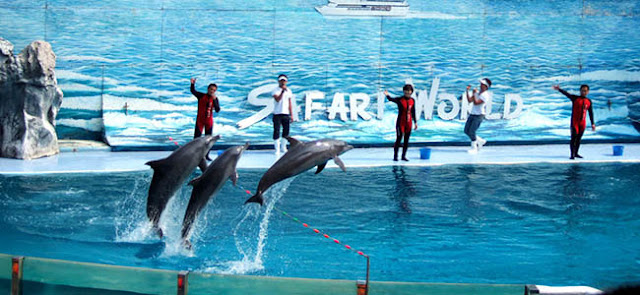
10 Safari World

Safari World is a zoo for those who don't like zoos… of course like any animal parks it has some good and some not so good sides but here animals certainly do have huge amount of space to roam free. Opened since 1988, Safari World is divided in two distinct areas: The open space of Safari Park where you can drive through in your car or in the park bus represents 480 acres for its open zoo and 180 acres for its bird park, then the Marine Park which is more of a traditional zoo mixed with shows and souvenir shops.


PT. I Five Productionz
Jalan Taman golf no.28 , LK Centre , Tangerang, Banten, Indonesia, 11520.
Phone:+62812 6 555 555 9 (WA)
BlackBerry Messenger: 5717ba69
Instagram : SKYE_AYARI
Facebook : Skye Club
Officials Line@ : @pwv8354w
E-mail :  admin@skyetourandtravel.com / skye.operator@gmail.com

Tuesday, August 11, 2015

All Palaces & Mansions in Bangkok

tour and travel di jakarta, agen travel jakarta, agen travel terbaik, tour and travel murah, agen travel online terpercaya, paket tour murah, promo air asia, promo pesawat garuda, Paket tour termurah terbaik terlengkap, www.skyetourandtravel.com, tour Hongkong, tour china, tour vietnam, disneyland hongkong, tour thailand, bangkok pattaya, turkey, beijing.

Ananta Samakhom Throne Hall Bangkok

The centerpiece of Bangkok's own Champs Elysees, this impressive two-storey white marble palace sits at the end of Dusit's long, wide Royal Plaza, a leafy ceremonial boulevard that's often the focus of regal pomp and ceremony during royal celebrations.

Ordered by King Rama V in 1907 and finished in the reign of King Rama VI, its neo-classical Renaissance architecture - particularly its central dome - dominate the scene just as Italian architects Mario Tamango and Annibale Rigotti intended. Following the 1932 coup it housed the first Thai parliament, but today its ornate interiors serve as a prestigious locale in which to court visiting dignitaries, hold state council meetings and royal occasions.


Inside is a stunningly beautiful central dome, under which the Royal Throne sits. Lining it and each of the six other domes' walls are frescoes depicting Chakri Dynasty monarchs (painted by Galileo Chini). The long hall on the upper floor is embellished with embossed roman and floral patterns showing Renaissance and Baroque arts. Outside, visitors can find impressive views both from the large paved plaza in front of it (site of the annual Tropping of the Color in December, the Red Cross Fair in late March, as well as the King Rama V statue) or the trim gardens adjoining it with Vimanmek Mansion. On Children's Day, in the second week of January each year, the grounds and interiors are more fully open to the public.


the Ananta Samakhom Throne Hall is open to the general public as a museum, with permanent exhibitions on the country’s national artists and showcases of arts and crafts by the students at the Chitralada Vocational Centre. Guided tours are available, at 30-minute intervals, from 9:30 to 15:30 daily (except Monday). Photography is not permitted inside the building. Please note that this is a royal property; a strict dress code applies, meaning no flip-flops, shorts, sleeveless shirts or T-shirts.


Ananta Samakhom Throne Hall

Opening Hours: 9:30 until 16:00, Tues - Sun (ticket office closed 15:30)
Location: Royal Plaza, Dusit
Price Range: 50 Baht
How to get there: Taxi is probably the best way to go


Bang Pa-In Royal Palace

The Royal Summer Residence Near Ayutthaya

Situated 60 km north of Bangkok and within easy reach of Ayutthaya is the illustrious Bang Pa-In Royal Palace. The palace complex was used as a summer dwelling by the Siamese royalty and their consorts. 

Also called 'Bang Pa In Summer Palace' the park comprises several iconic buildings dotted around a large park and renting an electric cart is a good way to get around, especially on hot days. Coming all the way from Bangkok just for the palace might not be worth the trip but it is a great stop on the way to Ayutthaya.


Originally created by King Prasat Thong in 1632, it is not known whether it was in use at the time of the Burmese raid. But in 1807, when Sunthon Phu, the kingdom's best known poet sailed past, it was a shadow of what Bang Pa-In once was, abandoned and overgrown.


According to Dutch chronicler Jeremias Van Vliet, King Ekathotsarot (1605 - 1610) was once shipwrecked on an island while sailing on the Chao Phraya River. On the island, he was befriended by a woman, who bore his (illegitimate) child. The child grew up to ascend the throne. This boy was later to become known as King Prasat Thong (1632 - 1656). He founded a monastery on his mother's land and had a pond dug and built a palace to the south of the monastery. The only building mentioned in the chronicle was the Aisawan Thiphya, created in 1632, the year of birth of his son, the future King Narai (1656 - 1688).

After the Burmese raids in 1767, the Palace complex of Bang Pa-In was laid to waste and left abandoned for a long time. King Mongkut (Rama IV), who reigned from 1851 to 1868, started a revival of the palace. Most of the buildings as they stand today were created by his successor King Chulalongkorn (Rama V), who also expanded the area into the magnificent sprawling Versaillesque gardens between 1874 and 1899 with features of European-style architecture.


Highlights of Bang Pa-Inn

Phra Thinang Wehart Chamrun, the only building open to commoners, is a Chinese-style palace and throne room, with marvellous ornamental tiles, heavy ebony furnishings, gold, silver and porcelain delicate fretwork and a red lacquer interior. One of the highlights is an intricately carved camel bone dragon. As pretty is Ho Withun Thasana, or Sages Look-Out, a tower used by royal parties as an observatory to view the heavens or surrounding countryside.

The Aisawan Thiphya, the iconic Divine Seat of Personal Freedom, or 'floating' pavilion, is an archetypal Thai pavilion set in the middle of the ornamental pond. It is said to have been a favourite afternoon spot for young Royals to read poetry.


The Memorial to Queen Sunanda Kumariratana is a marble obelisk shrine set in a garden dedicated to the Queen. At the time, a Thai law told that commoners were forbidden to touch royalty by punishment of death. One day in 1881, a royal barge carrying the queen capsized on the Chao Phraya River. Onlookers were forced to watch their beloved queen drown, while nobody made any attempt to rescue her. Moreover, they were instructed to do so by an officer. King Chulalongkorn was horrified the vizier could carry out the law to the letter. The memorial contains a poem written by the heart-broken widower King himself. The Memorial to Princess Saovabhark and Three Royal Children is a marble cenotaph to consort Princess Saovabhark Nariratana and their three children who died in the same year in 1887.


Bang Pa In Royal Palace

Opening Hours: everday from 8.30 a.m. to 16.30 p.m. Tickets sold until 15.30 p.m.
Tel: 035-260144
Dress Code: Proper attire is required similar to the Grand Palace, no short skirts or short pants, no sleeveless shirts.

Price Range: 100 baht, 400 baht to rent an electric golf cart


Chitraladarahotarn Palace

Closed to the public, this is His Majesty King Bhumibol and Queen Sirikit's official residence. Constructed by King Rama VI and formerly King Chulalongkorn's summer home, its one-square kilometre grounds include several artificial lakes and are bordered by Italian-designed walls and a prominent moat. At each corner is a fountain adorned with late Baroque figures drawn from mythology, evidence of the cultivated taste of Thailand's rulers.

Today it not only serves as live-in palace for the monarchy, but is also home to an agricultural research station founded by his HM the King to help solved the problems of Thai farmers around the country. Called The Royal Chitralada Projects, this non-profit institute includes experimental rice fields, a fish farm, dairy farm, fruit juice plant, beef-rearing unit, a candle factory and mushroom factory. Originally built for royal offspring, there is also the Chitralada School. Today, the children of staff and people not associated with the palace are admitted, from kindergarden through to 12th grade.


Location: Rama V Road, Dusit


Jim Thompson House in Bangkok

The lovely garden-enclosed compound sitting on the bank of the Saen Saeb Canal would have gone completely unnoticed, had it not been for a legacy left behind by a middle-aged American man named Jim Thompson. His elegant residential enclave, comprising six traditional Thai teakwood houses transported from Ayutthaya and Bangkok’s Ban Krua community, echoes Jim Thompson’s 30-year love affair with Southeast Asian art and cultural heritage. 

An architect by training and an avid collector of Asian objets d’art, Jim Thompson’s keen eyes and flair for design breathed life into everything he touched. After his discharge from military service in 1946, Jim Thompson decided to settle down in Thailand, where he dedicated over 30 years to reviving Thai silk – then a dying cottage industry – and introduced it to the world’s most respectable fashion houses and catwalks in Paris, New York, London and Milan. 


The same goes for his Thai house, which was no ordinary teakwood villa complex filled with incongruous collections of antiques, but a breathing museum – even then – that embodies Jim Thompson’s life-long passion and whimsical design choices. One day in 1967, while at the height of his success, he mysteriously disappeared into the Malaysian jungle, and thus began the legacy of Jim Thompson…


Where East Meets West

In the shadow of surrounding trees, the house’s inconspicuous façade belies a tastefully decked entry foyer, itself an unconventional architectural feature in traditional Thai houses and a preamble to Jim Thompson’s signature East-meets-West style permeating throughout the house.

A clever lighting arrangement draws your eyes to two wall niches displaying a 17th Century standing Buddha and a wooden hand-carved figurine. High above your head, a Belgian chandelier glistens from the ceiling, while the floor is laid out with Italian marble tiles, punctuating the heavy wood accents on the walls and indoors staircase.


A Tasteful Collection of Art and Antiques

Upstairs, you are greeted by a series of decorative wall hangings that Jim Thompson acquired from various Buddhist temples. Like ancient murals, they tell stories of the Buddha’s previous and present lives as well as his spiritual journey towards attaining enlightenment. From here, proceed to the right and encounter the solemn sandstone Buddha image guarding the entry to the Thai kitchen, which now houses Jim Thompson’s exquisite collection of Benjarong porcelain ware.

The dining room is housed inside the 19th Century teakwood villa Thompson bought from its owner in Ayutthaya. On the dining table, fashioned from two Chinese mahjong tables, the blue-and-white porcelain set is laid out in its full glory, as if dinner is about to be served, with Thompson seated at the head of the table, his back to the windows. 


Jim Thompson House - Living at the Water’s Edge

Set between the private quarter and the dining area is the living room, constructed from the 100-year-old wooden house Jim Thompson bought from the Ban Krua Muslim community just across the canal. The villagers at Ban Krua were the first weavers of the Jim Thompson silk brand. Jim Thompson used to row across the canal and back every day, until he decided to build a permanent home here.

With a four-metre-high ceiling and one open-sided wall, the living room is a lofty area overlooking the Saen Saeb Canal. Thompson masterfully converted the four windows into four display niches, upon which he placed four Burmese guardian spirits (or ‘Nats’) carved from wood, a gift from the Burmese government.


Master of His Own Trade

As you wander from one room to the next, you can’t help but admire Jim Thompson’s thoughtful eclecticism and meticulous attention to details. His sophisticated taste and in-depth knowledge of Southeast Asian art shine through the rare antique and art collections placed tastefully in each room that enrich the overall ambience, rather than just show off his wealth.

While respecting local traditions and customs, he was no slave to them either. The staircase and bathrooms are found indoors, rather than outdoors as you would normally find in traditional Thai homes. Satellite houses, which normally would be linked through an open courtyard area, are all grouped under one roof with a covered walkway. And the decorative window panels, which traditionally face outwards, face in. Jim Thompson’s skillful adaptation of the local style to suit his western upbringing was years ahead of its time, rendering a timeless twist to what would otherwise be labeled as ‘classic’ or simply ‘colonial’. 


The Jim Thompson Brand

After Jim Thompson’s mysterious disappearance, a court-appointed administrator, which 10 years later became The James H.W. Thompson Foundation, took over the management of his house and assets. Today, the brand Jim Thompson also extends to an art centre, souvenir boutique, restaurant and café, as well as banqueting facilities located in the same vicinity. With an outdoor terrace by the canal, the elegantly appointed Araya Hall caters for gatherings of between 40 and 80 people, whether a corporate function, meeting, fashion show, wedding banquet, press conference, private luncheons or dinners.


Jim Thompson House

Opening Hours: 09:00-17:00 (last guided tour at 17:00)
Location: Soi Kasemsan 2, opposite the National Stadium on Rama I Road.
BTS: National Stadium
Address: 6/1 Soi Kasemsan 2, Rama 1 Road
Tel: +66 (0)2 216 7368

How to get there: Take exit 1 from the BTS National Stadium Station, turn right into Soi Kasemsan 2 and continue walking all the way to the very end. The museum will be on your left-hand side.


Phyathai Palace in Bangkok

Built in 1909 during King Rama V’s reign as temporary royal residence, Phyathai Palace comprises five buildings all constructed in a combination of neo-gothic and Romanesque styles. The interiors showcase a rococo influence, complete with beautiful ceiling frescos, gilded Corinthian columns and elaborately carved fretworks.

Behind the palace’s architectural splendour, though, rests one of the Kingdom’s most important but time-forgotten political history – the Dusit Thani, or ‘Heaven on Earth’, where experiments were carried out on the palace’s 160,000sqm grounds to test-run the country’s transition from absolute monarchy to municipal government and then parliamentary government. The experimental city was constructed to resemble a ‘utopia’, complete with its own city pillar, municipal government, temples and vast agricultural farms. It even had its own citizens, made up of court servants, who were given freedom to vote for their leader once a year.


At the end of eight years, after King Ramai VI passed away, the idea of the Dusit Thani collapsed. The palace was then transformed into a hotel, which by today’s standard would be labeled as a luxury boutique hotel. World War II brought the end to the hotel business, and in 1952 the site was set up as a military hospital and eventually today’s Phramongkutklao Hospital.


The palace is registered as a national historic building and is now a part of the hospital’s administrative buildings. It is, perhaps, the only palace building that you can stroll around freely. There’s an atmospheric café, Café Norasingh, housed inside what used to be the royal reception hall.


Phyathai Palace

Opening Hours: Guided tours available on Saturdays at 9:30 and 13:30. Otherwise, you are free to walk around.
Location: Ratchawithi Road (inside Phramongkutklao Hospital)

BTS: Victory Monument


The Grand Palace


If there is one must-see sight that no visit to Bangkok would be complete without, it's the dazzling, spectacular Grand Palace, undoubtedly the city's most famous landmark. Built in 1782 - and for 150 years the home of the Thai King, the Royal court and the administrative seat of government - the Grand Palace of Bangkok is a grand old dame indeed, that continues to have visitors in awe with its beautiful architecture and intricate detail, all of which is a proud salute to the creativity and craftsmanship of Thai people. Within its walls were also the Thai war ministry, state departments, and even the mint. Today, the complex remains the spiritual heart of the Thai Kingdom.

Within the palace complex are several impressive buildings including Wat Phra Kaew (Temple of the Emerald Buddha), which contains the small, very famous and greatly revered Emerald Buddha that dates back to the 14th century.

The robes on the Buddha are changed with the seasons by HM The King of Thailand, and forms an important ritual in the Buddhist calendar. Thai Kings stopped living in the palace around the turn of the twentieth century, but the palace complex is still used to mark all kinds of other ceremonial and auspicious happenings.

Grand Palace Layout and Orientation
The palace complex, like the rest of Ratanakosin Island, is laid very similar to the palaces of Ayutthaya, the glorious former capital of Siam which was raided by the Burmese. The Outer Court, near the entrance, used to house government departments in which the King was directly involved, such as civil administration, the army and the treasury. The Temple of the Emerald Buddha is located in one corner of this outer court. The Central Court is where the residence of the King and halls used for conducting state business were located. Only two of the throne halls are open to the public, but you'll be able to marvel at the exquisite detail on the facades of these impressive structures.

The Inner Court is where the King's royal consorts and daughters lived. The Inner Court was like a small city entirely populated by women and boys under the age of puberty. Even though no royalty currently reside in the inner court, it is still completely closed off to the public. Despite the proximity of the Grand Palace and Wat Phra Kaew, there's a distinct contrast in style between the very Thai Temple of the Emerald Buddha and the more European inspired design of the Grand Palace (the roof being the main exception). Other highlights are Boromabiman Hall and Amarinda Hall, the original residence of King Rama I and the Hall of Justice.


Royal Reception Halls

Nowadays its impressive interior is used for important ceremonial occasions like coronations. It also contains the antique throne, used before the Western style one presently in use. Visitors are allowed inside the spacious European style reception room or Grand Palace Hall (Chakri Maha Prasat). Then there's the impressive Dusit Hall, rated as perhaps the finest architectural building in this style, and a museum that has information on the restoration of the Grand Palace, scale models and numerous Buddha images.


Important Note about the Grand Palace:

A strict dress code applies. The Grand Palace with The Temple of the Emerald Buddha is Thailand's most sacred site. Visitors must be properly dressed before being allowed entry to the temple. Men must wear long pants and shirts with sleeves (no tank tops. If you're wearing sandals or flip-flops you must wear socks (in other words, no bare feet.) Women must be similarly modestly dressed. No see-through clothes, bare shoulders, etc. If you show up at the front gate improperly dressed, there is a booth near the entrance that can provide clothes to cover you up properly (a deposit is required).


The Grand Palace

Opening Hours: Daily 08:30 - 15:30
Location: Na Phra Lan Road, Old City (Rattanakosin)
Price Range: Tickets sold from 8:30 - 15:30 and cost 500 baht! One ticket includes entry to Vimanmek Palace and Abhisek Dusit Throne Hall.

Vimanmek Mansion in Bangkok

Located on Ratchawithi Road behind the National Assembly, Vimanmek Royal Mansion is the world's largest building made entirely of golden teak. Removed from Ko Sichang in Chonburi province, it was rebuilt in the Dusit Palace in 1900 by the command of King Rama V. It was recently renovated by HM Queen Sirikit, and made into a museum paying homage to the late King.

As well as antique furniture, there's glassware, porcelain, old photographs and memorabilia from the late King's reign (1868 - 1910). Many rooms currently maintain the atmosphere of the past.

A guided tour is provided to visitors. Most of the building in the same compound are now used as museums. The outstanding one is Abhisek Dusit Hall, which exhibits HM Queen Sirikit's collection of handicraft masterpieces created by rural people. The other displays of various items and art objects including HM King Bhumibol's photography, paraphernalia of rank and portraits, ancient cloth, clocks, and royal carriages. Parts of Vimanmek are still used for various state functions and receptions for visiting royalty when the buildings are closed to the public. Traditional Thai dancing commences daily at 10:30 and 14:00.


Vimanmek Mansion

Opening Hours: 08:30 until 16:30 (Tuesday - Saturday, last ticket at 15:30)
Location: Rajavithee Road. Close to Dusit Zoo and the Dusit Palace complex.
Price Range: 100 baht, which entitles you to enter every building and gallery. Note that you will need to show your ticket to the attendant at the entrance to every building. Please note: No shorts or sleeveless shirts and skirts must be at least knee-length or you won't be allowed in.

Suan Pakkad Palace in Bangkok

tour and travel di jakarta, agen travel jakarta, agen travel terbaik, tour and travel murah, agen travel online terpercaya, paket tour murah, promo air asia, promo pesawat garuda, Paket tour termurah terbaik terlengkap, www.skyetourandtravel.com, tour Hongkong, tour china, tour vietnam, disneyland hongkong, tour thailand, bangkok pattaya, turkey, beijing.

Suan Pakkad Palace is a place to find visions of Thailand you thought long since vanished in Bangkok. Its name means 'cabbage patch', in reference to when the land was nothing more than just that. Today, however, it's a well-tended tropical garden with serene ponds surrounding eight traditional Thai houses, each of which brims to overflowing with fine arts, antiques and oddities belonging to Prince and Princess Chumbhot.

In a spirit of sharing, they converted their traditional private residence to a museum back in 1952, the first instance of a Thai family doing so. Their philanthropic rationale was that while treasured possessions are private property, they still constitute a part of mankind's heritage and as such should be made accessible to all. Slightly odd then that what greets visitors is an entirely unrelated and recent addition, built in 1996. The Chumbhot - Panthip Centre of Arts houses prehistoric Ban Chieng artefacts dating back to the Neolithic, Bronze and Iron Ages. These rare items of painted pottery, bronze weapons and tools, attest to a Southeast Asian civilisation that equals Egypt and Stonehenge in terms of technological and social advancement.


Take a Journey Into a Forgotten Time

The architectural centrepiece at Suan Pakkad Palace encompasses four Thai teak houses nestled between the front of the palace and garden, a family heirloom dating from the 19th Century. Each was transported here from its original location in Chiang Mai and, like most traditional Thai houses, are two storeys high (each is interlinked by upstairs platforms, so you can walk sequentially between buildings without having to trudge up and down stairs).

The first house contains musical instruments, downstairs belonging to Prince Chimbhot's father, Prince Paribatra, a successful Thai composer in his own right. Rare drums, xylophones, gongs and three-stringed fiddles are displayed. Highlights include a Gong Wong Yai, a bizarre-looking percussion instrument with 16 metal discs (each with different pitch), and old vinyl records of a Bangkok orchestra performance in the 1920s. Upstairs is an eclectic gathering of relics from various periods of Thai and Southeast Asian history. Amidst dusty muskets, swords and spears, a portrait of King Rama V, three Buddha images (two in the Subduing Mara pose, one in the attitude of dispelling fear, and classic 7th Century Khmer statue the 'Torso of Uma') stand out.


A Treasure Chest of Historical Discovery

Houses two and three contain decorative items and furniture from their daily lives: late 17th Century drawings, gilded book and scripture depicting the life of Lord Buddha, 19th Century silverware, Benjarong porcelain, food containers and trays inlaid with mother-of-pearl, and ornate commemorative fans donated by Buddhist monks. There is also an exquisite model Thai throne with palanquin and a gold-stitched umbrella that once belonged to Prince Chumbhot's great aunt. The fourth, with balcony overlooking the garden, features a collection of Buddha images from different periods of Thai history.


Houses five to eight were added to the grounds later, and are located to the west of the property. These contain, in sequence, prehistoric arts from Ban Chiang and a colourful collection of minerals, shells and fossilised fish, a small museum exhibiting the elegant Thai masked dance Khon, with full-sized masks, puppets and clay figurines on display, prehistoric artefacts from Kanchanaburi province - alongside Chinese-styled ceramic wares and terracotta sculptures, and some of the prince and princess' beautiful household items including glassware, silverware and porcelain.

Standing out though is the Lacquer Pavilion, tucked away quietly at the back of the tranquil grounds. This dates to the 17th Century and was originally located at a temple near Ayutthaya. The prince bought it in a sorry state as a birthday gift for the princess in 1959. Now fully restored, it's an exquisite example of Thai architecture, with richly carved gilded wood walls and an interior filled with lively Ramayana and Buddha mural paintings drawn in gold on black lacquer. Next to this is a wooden barge Prince Paribatra used for King Rama V's royal processions.


Suan Pakkad Palace

Opening Hours: 09:00 - 16:00
Location: 352-354 Sri Ayudhya Road (five minutes walk from BTS Phaya Thai), nearest area Pratunam
Tel: +66 (0)2 245 4934

Thailand Tourism News

Add Friend

Hubungi Kami Segera...

Name

Email *

Message *